
Wednesday, 1 April 2015


Sunday, 1 March 2015
Feel The Presence of Nature...

“Is not a dew-drop on a blade of grass more beautiful than a pearl set in gold? Is not a living spring, which gushes up before us, we know not whence, more beautiful than all the fountains of Versailles?”
Saturday, 28 February 2015

Friday, 27 February 2015
Feel The Presence of Nature...

“The strange white world lay stroked by silence. No birds sang. The garden was no longer there, in this forested land. Nor were the out-buildings nor the old crumbling walls. There lay only a narrow clearing round the house now, hummocked with unbroken snowdrifts, before the trees began, with a narrow path leading away.”
Thursday, 26 February 2015
Indian Tradition...

India is the birthplace of Hinduism, Buddhism, Jainism and
Sikhism, collectively known as Indian religions. Indian religions are a major
form of world religions along with Abrahamic ones. Today, Hinduism and Buddhism
are the world's third and fourth-largest religions respectively, with over 2
billion followers altogether, and possibly as many as 2.5 or 2.6 billion
followers.
India is one of the most religiously diverse nations in the
world, with some of the most deeply religious societies and cultures. Religion
plays a central and definitive role in the life of many of its people.
According to a 2001 census of India, the religion of 80% of
the people is Hinduism. Islam is practised by around 13% of all Indians.The
country had over 23 million Christians, over 19 million Sikhs, about 8 million
Buddhists and about 4 million Jains.
Sikhism, Jainism and especially Buddhism are influential not
only in India but across the world. Christianity, Zoroastrianism, Judaism, and
the Bahá'í Faith are also influential but their numbers are smaller. Atheism
and agnostics also have visible influence in India, along with a self-ascribed
tolerance to other people.
The Hindu religion has many schools, each with their own
unique views. For example, according to Yogavasistha, a spiritual text of the
Advaita school of Hindu religion, the values of the liberated (Hindi: जीवन्मुक्ति), self-actualised human
being, may be summarised as follows: "Pleasures do not delight him; pains
do not distress. Although engaged in worldly actions, he has no attachment to
any object. He is busy outwardly, yet calm inwardly. He feels free from
restrictions of scriptures, customs, age, caste or creed. He is happy, but his
happiness does not depend on anything else. He does not feel needy, proud,
agitated, troubled, depressed or elated. He is full of compassion and
forgiveness even to those who mean him harm. He does the right thing,
regardless of the pressures. He is patient, perseverant, and without any
impurity in his heart. He is free of delusions, he does not crave for anything.
His sense of freedom comes from his spirit of inquiry. The fruits of his
inquiry are his strength, intellect, efficiency and punctuality. He keeps
company of wise and enlightened persons. He is content."
There is significant historical discourse in India on the
notion, relevance, and the existence and non-existence of God. Dharmakirti, for
example, in the 7th century wrote in Pramanavarttikam:
वेद प्रामाण्यं
कस्य चित् कर्तृवादः
स्नाने धर्मेच्छा जातिवादाव लेपः|
संतापारंभः पापहानाय चेति
ध्वस्तप्रज्ञानां पञ्च लिङगानि
जाड्ये||
Believing that the
Veda are standard (holy or divine), believing in a Creator for the world,
Bathing in
holy waters for gaining punya, having pride (vanity) about one's job function,
Performing
penance to absolve sins,Are the five symptoms of having lost one's sanity.
Wednesday, 25 February 2015
Feel The Presence of Nature...
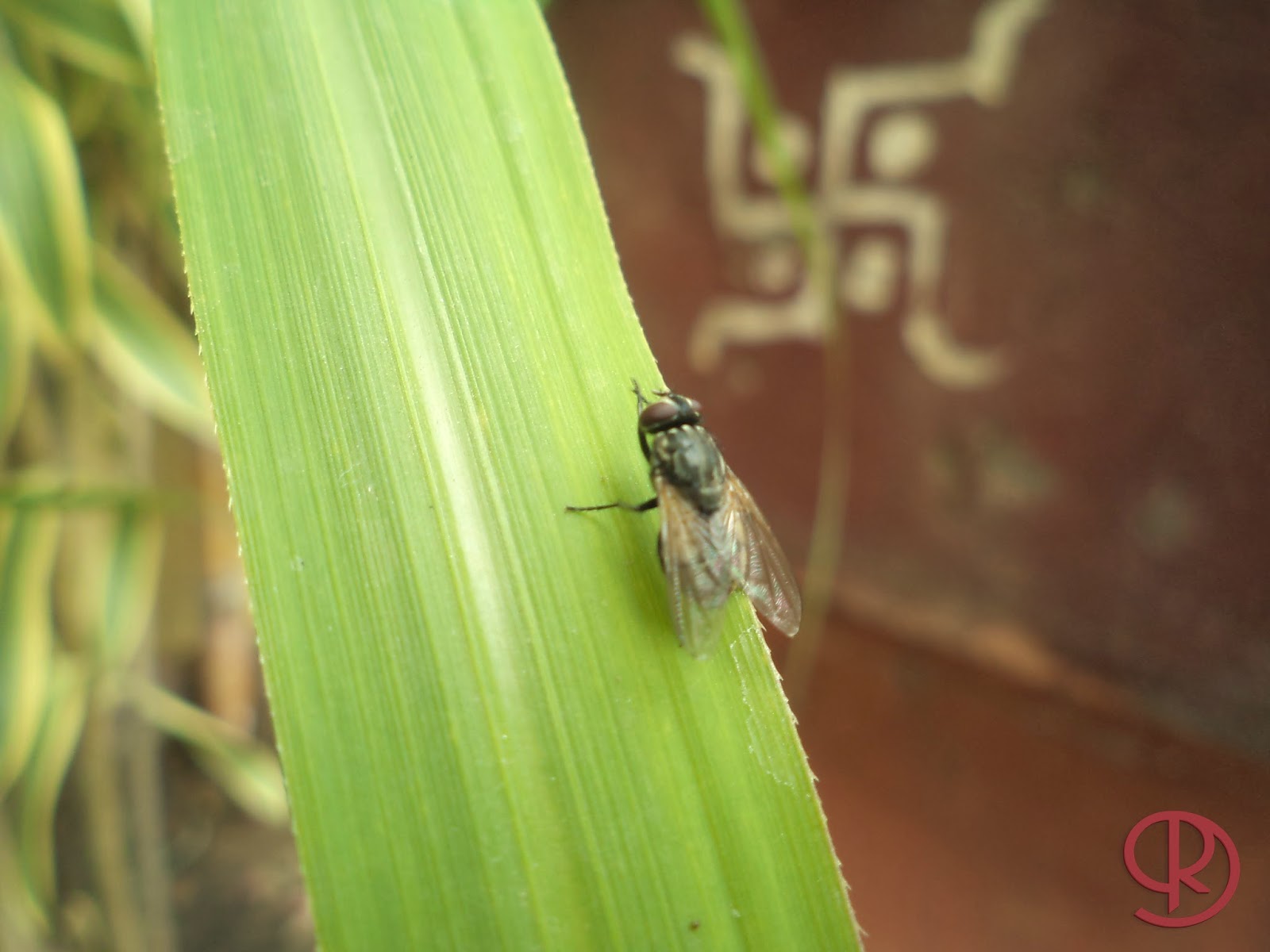
“Is there not glory enough in living the days given to us? You should know there is adventure in simply being among those we love and the things we love, and beauty too.”
Tuesday, 24 February 2015
Feel The Presence of Nature...

“The graceful wings of a dove lead to the endless imagination in a dream wings of pain.”
Monday, 23 February 2015
Feel The Presence of Nature...

“A person who remains attached to his roots with his foot always on the ground grows like a green tree that bears the best fruit.”
Sunday, 22 February 2015
" Save Energy "

Energy conservation refers to reducing energy consumption
through using less of an energy service. Energy conservation differs from
efficient energy use, which refers to using less energy for a constant service.
For example, driving less is an example of energy conservation. Driving the
same amount with a higher mileage vehicle is an example of energy efficiency.
Energy conservation and efficiency are both energy reduction techniques
Even though energy conservation reduces energy services, it
can result in increased environmental quality, national security, personal
financial security and higher savings. It is at the top of the sustainable
energy hierarchy.[citation needed] It also lowers energy costs by preventing
future resource depletion.
Saturday, 21 February 2015
" End Poverty "

In the book, Sachs argues that extreme poverty—defined by
the World Bank as incomes of less than one dollar per day—can be eliminated
globally by the year 2025, through carefully planned development aid.
He
presents the problem as an inability of very poor countries to reach the
"bottom rung" of the ladder of economic development; once the bottom
rung is reached, a country can pull itself up into the global market economy,
and the need for outside aid will be greatly diminished or eliminated.
In order to address and remedy the specific economic
stumbling blocks of various countries, Sachs espouses the use of what he terms
"clinical economics", by analogy to medicine. Sachs explains that
countries, like patients, are complex systems, requiring differential
diagnosis, an understanding of context, monitoring and evaluation, and professional
standards of ethics.
Clinical economics requires a methodic analysis and
"differential kapay" of a country's economic problems, followed by a
specifically tailored prescription. Many factors can affect a country's ability
to enter the world market, including government corruption; legal and social
disparities based on gender, ethnicity, or caste; diseases such as AIDS and
malaria; lack of infrastructure (including transportation, communications,
health, and trade); unstable political landscapes; protectionism; and
geographic barriers. Sachs discusses each factor, and its potential remedies,
in turn.
In order to illustrate the use of clinical economics, Sachs
presents case studies on Bolivia, Poland, and Russia, and discusses the
solutions he presented to those countries, and their effects. The book also
discusses the economies of Malawi, India, China, and Bangladesh as
representative of various stages of economic development.
Subscribe to:
Posts (Atom)